Beyond KWU: Essential Black Spaces in Salina
Written by Sydney Mitchell on December 8, 2025
I’ve lived in the Midwest for all 21 years of my life. Mostly, I have lived in small towns—places with populations under 5,000 people. Rural life is something I have become used to. However, diversity is always lacking in these rural areas. Being of mixed race, I grew up as one of the community minorities. This experience has always made me hyper-aware of my race.
Coming to Kansas Wesleyan University was a bit of a culture shock. Suddenly, I was no longer the only person of color when I walked into classrooms. This was a new and different feeling for me. However, while KWU is a diverse university with students from all over the world, it is located in the less-diverse town of Salina, Kansas.
The Salina Code: Acknowledgment and Assumption
My time in Salina has been incredibly positive. I’ve been involved in campus clubs and activities like MCSU and cheer. I have also had the chance to engage with the community outside of the university. For example, I got involved in the Salina NAACP, visited community churches, and served tables at local restaurants. Through these activities, I have met many Black Salina locals. Because I am always hyper-aware of my race, I have noticed a few key things about the Black communities here.
First, when you see another Black person in public, you acknowledge them in some capacity. Whether it is a simple head nod, a wave, or a friendly “hello,” it is something you do. I don’t know the psychology behind this, but it’s true. While serving tables, I have never come across a Black local that entered the restaurant who did not go out of their way to acknowledge me. It’s incredibly interesting.
Furthermore, I have never met more nosy people than the Black locals in Salina. Throughout my time serving tables, I have had an absurd number of people ask me who my parents are. I’ve heard every version of this question, from “who’s kid are you?” to “Are you _____’s daughter?” This is one of the craziest things to me. Being Black in Salina is so rare that locals often assume I am someone they already know. People are usually not surprised when I say that I am not from Salina, but they are surprised when I say I am from a much smaller town.
The Search for Entertainment and Fellowship
Finally, I noticed a desire for a space where these communities can find entertainment. This realization came to me after a man sitting at the bar in the restaurant I worked at asked me, “Where do the Black people be at?” This question stopped me dead in my tracks. So, where do they hang out?
My first answer was “Big Nose Kate’s, it’s a bar downtown.” However, this wasn’t really true. I said that because that is the bar that always has the most traction, and you would be MOST LIKELY to find Black people there. It wasn’t necessarily a place where Black people spend a lot of time.
So, does Salina have places for Black people to engage with people that look like them? The short answer is yes. The detailed answer is: yes, but you’ve probably never heard of them or been to them. Why? Because they’re small businesses that don’t (and won’t) get the same level of attention as other places.
Highlighting Black-Owned Local Businesses
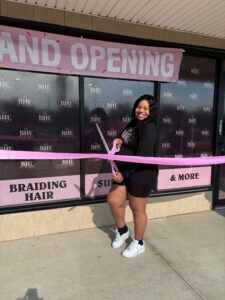
photo from Salina Post
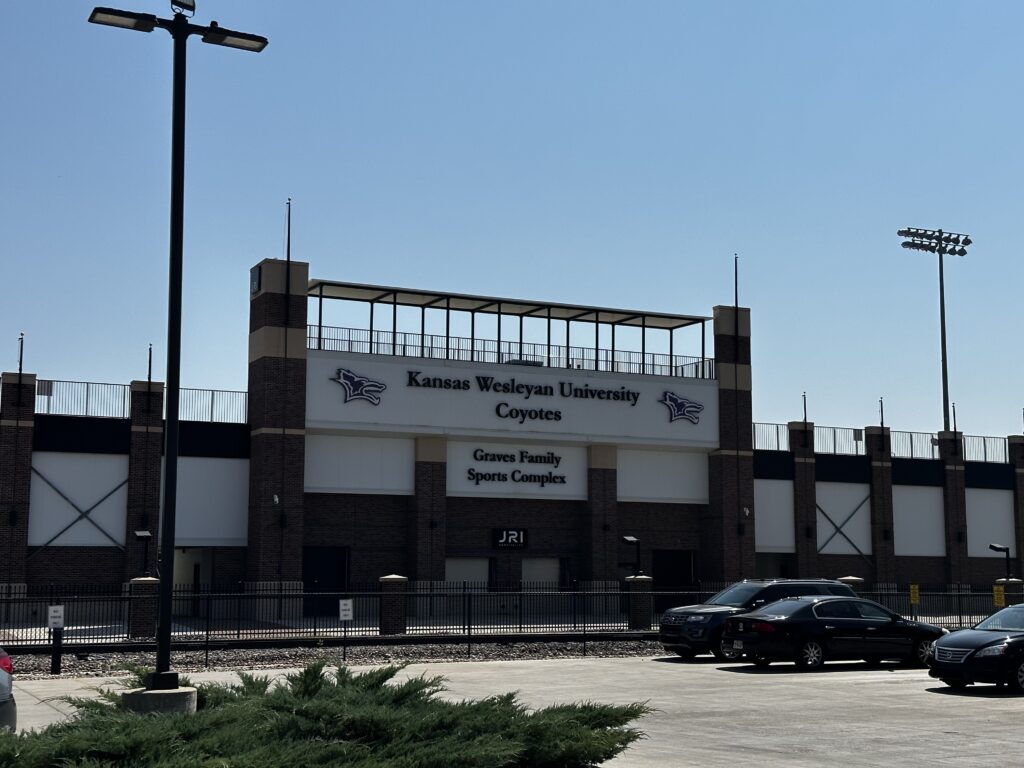
I have come across some of the Black-owned businesses in town. They are some of my favorite places to visit. For instance, you can find two of them right around the corner from Kansas Wesleyan in Kraft Manor. Jabo’s is a Black-owned soul food restaurant located in Kraft manor, and their fried catfish is amazing. A few doors down from them is the Black-owned BHF Beauty Supply Store, a business started by a Bethany College graduate. I work there part-time when I am off from school and I love it. In addition, you can also find a couple of Black-owned barbershops, like Carl’s Cutsand FineLine Barbershop.
These places have amazing vibes and are incredible businesses to highlight in the community. However, I knew that guy in the restaurant was not asking about beauty supply stores and barbershops. He wanted to know where Black people like to go out.
Finding Community at Local Venue
My initial answer to him was Big Nose Kate’s. Since then, I have discovered a place that often hosts events tailored to minority community interests.
The Back Alley is an entertainment venue located in the back of Sky Trampoline Park, also right around the corner from Kansas Wesleyan University. I have visited this venue multiple times for comedy shows, R&B nights, and movie screenings. It has quickly become one of my favorite places to go to enjoy a night out.
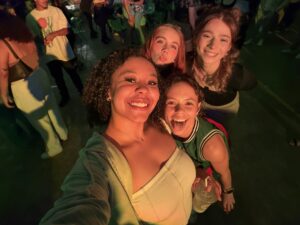
photo by Sydney Mitchell
This venue specifically hosts events that attract minority communities. They host events like Reggae night, R&B and Hip-Hop nights, and Mexican music nights. It recently hosted an R&B night that I attended with some friends. I like going here instead of Big Nose Kate’s because they play music from artists and genres that I enjoy. These genres (R&B and Hip-Hop) are also the genres of music most associated with Black people. As you can imagine, the crowds at these events are far more diverse than the ones found at other local bars.
They have also hosted events that feature local Black musical artists. Black Salina DJs are often running the show at these events, and people love it. This gives people from minority communities a chance for fellowship. All of them get together to have a good time by listening to music from some of their shared favorite Black artists. This place provides camaraderie for people from communities that are scarcely underrepresented in Salina.
Building Visibility
My journey from being hyper-aware of my race in small towns to recognizing the subtle code of acknowledgment in Salina has been a unique learning experience. Ultimately, what I’ve realized is that visibility for minority communities here isn’t about one single place. Instead, it’s about a strong network and necessity. The deep familiarity demonstrated by older locals asking “who’s kid are you” speaks to the tight-knit nature of the established community.
Simultaneously, the success of venues like The Back Alley and businesses like Jabo’s shows there is a real hunger for dedicated spaces—places where culture is celebrated and people don’t have to search hard to find fellowship. The university brings diversity to Salina, but engaging with these local gems is how I have found places of cultural connection. These places are important for understanding the full, vibrant story of the city, and are even more important for the well-being of local minorities. I think it’s important for Salina to continue to foster and create spaces for local minorities.
Author

Reader's opinions
Continue reading